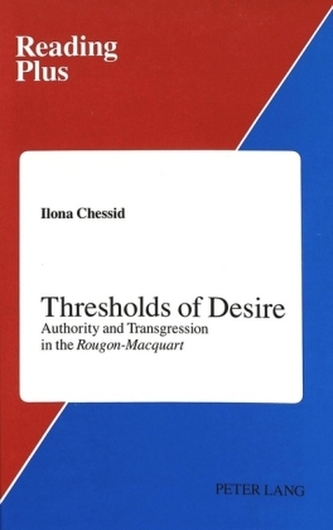
La lecture des 'Rougon-Macquart' est à l'image des intuitions centrales de ce livre. Il y a tant et tant de portes et de seuils à franchir pour passer des apparences d'un réalisme documentaire aux découvertes d'une réflexion inlassable - encore que masquée - sur les puissances du désir! Ilona...
przeczytaj całość
La lecture des 'Rougon-Macquart' est à l'image des intuitions centrales de ce livre. Il y a tant et tant de portes et de seuils à franchir pour passer des apparences d'un réalisme documentaire aux découvertes d'une réflexion inlassable - encore que masquée - sur les puissances du désir! Ilona Chessid nous guide le long de ce parcours, qui prend pour figure allégorique Nana et pour objet symbolique le 'voile', dénudant et couvrant à la fois le corps offert au regard. La mise à nu doit rester indéfiniment retardée, sous peine d'annuler le plaisir - plaisir de voir ou plaisir de lire... Ainsi se trouvent subtilement dévoilés, par une lectrice qui a sans doute médité l'exemple de Salomé, un des motifs dominants de l'imaginaire Zolien, et le 'double lien' de l'exercice critique... (Henri Mitterand, Columbia University)
Unlike many critics who see Zola's 'Rougon-Macquart' novels as explorations of a wide diversity of topics, Chessid looks for dynamics and structures that run through the entire cycle. The end result is a sophisticated study of narrative and thematic logic in Zola, running from functions of broken walls and shaded windows to structures of delay, deferral, and desire. This book will send the reader back to Zola with renewed appetite. (Barbara E. Johnson, Harvard University)
Countering the widely held view that Zola represents a humankind rigidly and inexorably boxed in by the social or mental compartments to which each character is confined, Dr. Chessid demonstrates the presence of the necessary counterpart to this system of enclosures: the ubiquitous transgressions of thresholds or of boundaries prove the acumen of her analysis and the fruitfulness of her approach, and her study of Zola's use of veils as signifiers of ambiguity is conducted with finesse. (Per Nykrog, Harvard University)
This is a very good, highly readable book. Chessid's innovative reconsideration of constructs with which most Zola scholars are already quite familiar should render the reader more appreciative of the 'Rougon-Macquart' as well as of Chessid's own contribution. (Lewis Kamm, Nineteenth-Century French Studies)
Ilona Chessid's work is a subtle and sophisticated piece of literary analysis. (Patrick Brady, Synthesis)
ukryj opis
Recenzja